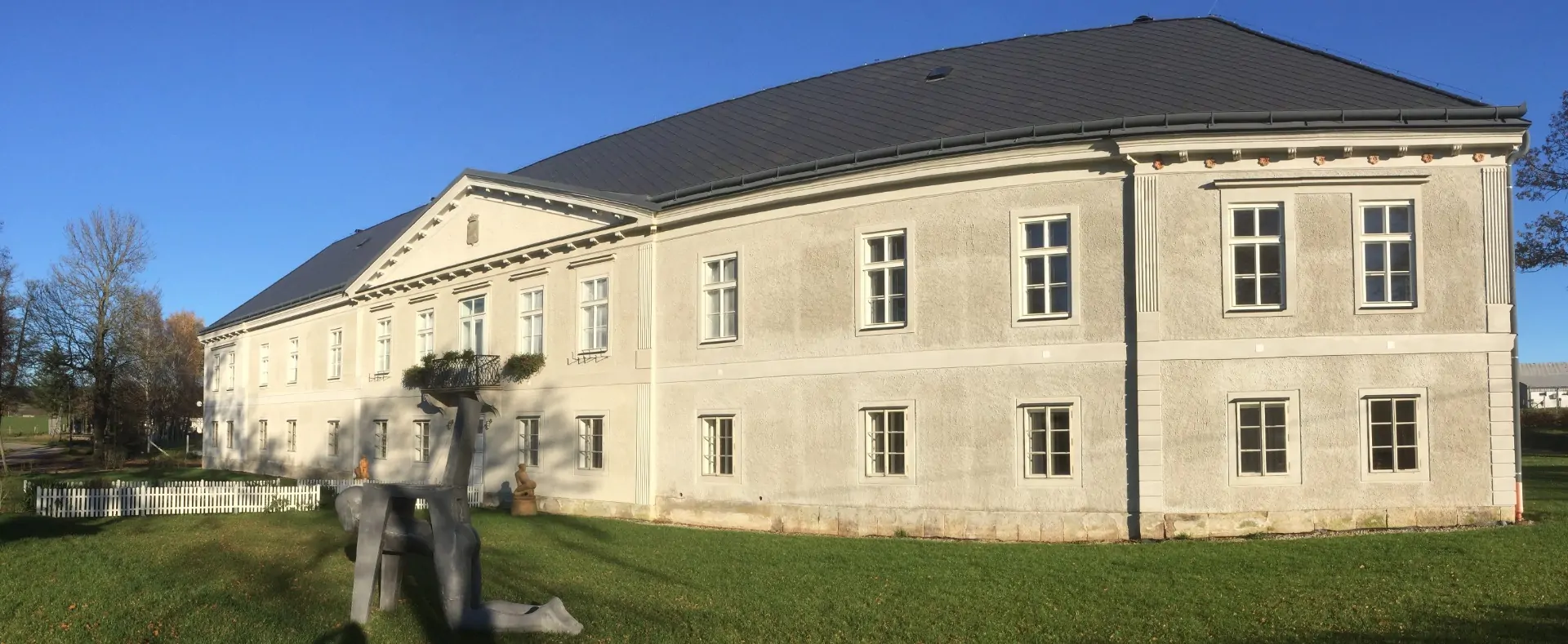
The Academy Dobrohoř 2026 is an intensive five-day creative workshop focused on classical music of the 20th and 21st centuries.
It will take place from August 28 to September 2, 2026, at Dobrohoř Castle, which provides accommodation and meals, facilities for teaching and independent work, and a concert hall all in one place – in a peaceful natural setting with beautiful views and opportunities for focused work and relaxation. Several pianos are available at the castle, some of which allow for preparations and string playing.
It is intended for 3 flautists, 3 clarinettists, 3 pianists, and 3 composers who want to grow, create, and transcend the boundaries of their artistic imagination together.
This is not a typical masterclass—it is collaboration in the best sense of the word. Performers and composers spend time together, creating new compositions, chamber ensembles, premieres, and artistic connections that can last for decades.
The main language of communication is English, so you should be able to communicate at least at a basic level. The lecturers also speak other languages.
The music of the last hundred years may not be familiar to everyone, not even to teachers at conservatories and universities. However, it is increasingly appearing among the compulsory pieces in international competitions and in the requirements for entrance exams and auditions for top orchestras. Interpreting this music can be challenging, but not impossible, if young performers receive the correct information and guidance.
Young composers, on the other hand, do not have many opportunities to work on their compositions with top performers and hear their ideas performed immediately. Yet this is how they learn the most.
The Dobrohoř Academy was founded to fill these gaps.
It aims to offer:
The academy will take place from August 28 to September 2, 2026, at Dobrohoř Castle in the Jindřichův Hradec Region, Czech Republic.
What can you expect every day?
From Saturday to Tuesday, each participant will have one 50-minute lesson per day with a lecturer in their field (4 lessons in total).
The afternoons are devoted to collaborative creation—both performers and composers—under the guidance of instructors. New ensembles, new compositions, and new ideas emerge. The schedule is adapted to the current needs of the participants.
Composers arrive with compositions in progress for the instruments available at the Academy. They finish the pieces right there and get to hear how their music sounds right away. The performers get the unique experience of working directly with the composers, including the composition instructors.
A concert by the instructors on the day of arrival and three concerts by the participants (each performing at least twice) during the Academy, both at Dobrohoř Castle and at concerts in Austria. In addition, lectures by interesting personalities, discussions, and inspirational meetings.
There will definitely be plenty of free time for your own preparation, exercise, relaxation, reading, walks in the beautiful surroundings, or chatting with friends.
What is expected of you?
Before the Academy, performers can begin studying compositions from the recommended repertoire, including works by composers Kryštof Mařatka and Jan Dušek*. This repertoire is not mandatory, but the lecturers have compiled it to include important works of Czech and world music of the 20th and 21st centuries for the given instrument. You can therefore come with any composition written after 1900 (late Romanticism is not preferred).
Pianists who apply to the Academy arrive with both solo and chamber repertoire. After the application deadline, they will receive information about the repertoire that flutists and clarinetists are bringing with them. This allows them to become their chamber partners, make new friends, and work together.
Composers, on the other hand, have the unique opportunity to start creating new works in advance for a known ensemble and to work on them at the Academy with experienced lecturers – whether composers or performers – flautist Monika Štreitová, clarinettist Anna Paulová, and pianist Moritz Ernst. They can also be sure that their compositions will be performed during the Academy. This is not always a given at many composition masterclasses. Of course, they can also perform their own or other people’s compositions at concerts.
*Jan Dušek will also be available to flautists and clarinettists as a piano partner with whom they can work on repertoire that they will not be playing with their fellow participants.
What will you gain by participating?
Above all, you will gain new knowledge and experience, meet excellent teachers and colleagues, and establish valuable contacts and friendships. You will also have the opportunity to perform at least two concerts and receive feedback from teachers and colleagues.
Last but not least, you will receive a certificate of completion from the Dobrohoř Academy at the end of the course.
Do you study two disciplines?
Participants involved in two fields (e.g., composition and playing an instrument) may consult with a teacher from the other field according to their individual capacities, but this cannot be guaranteed.
If you would like complete daily lessons with a teacher in a different field, please include this information in the special requirements section of your application. We will discuss it with the teachers, and we are sure to find a solution together.
Passive participants can take advantage of meals and accommodation (subject to availability) at Dobrohoř Castle with a 15% discount.
If you have any individual requirements (meals, accommodation, late arrival or early departure, etc.), please let us know before submitting your application. We are sure we can find a solution together.